
Europe by Train on a Budget: What to Change When Your Plan Costs Too Much

A Europe train trip on a budget starts to make sense when you can change the plan, not just add up the expenses. If the first draft is over your limit, the answer does not have to be another destination described as cheap. A different stay, fewer moves or one less paid visit may make a more useful difference.
This guide follows one worked example: eight days, seven nights and two bases, Prague and Brno. The traveller leaves from Berlin and returns there. We keep the food allowance, planned rail journeys and contingency intact while changing two other decisions. The point is to see what each choice does to the whole trip.
All euro amounts below are invented planning assumptions, not observed prices, quotes or a bookable package. The example was prepared on 6 November 2026. Travel dates have not been selected, and no accommodation or dated train inventory has been quoted. Replace every assumption with available prices before deciding whether this trip fits your money.
Give the example a clear traveller and scope
Our illustrative traveller is 29, lives in Germany and starts and finishes in Berlin. They travel alone, second class, are comfortable with a hostel dorm bed and have no existing pass or discount card. The assumed allocation limit is €800 for the eight days, including getting to Prague and home from Brno.
Those details matter. A private room for one, a different departure city, special food needs or travel with children changes the exercise. Being under a particular age does not mean every operator offers the same discount. Use your actual age, residence, dates and accommodation requirements in the search.
The eight days include arrival, one move between bases and the departure home. Any additional travel night has to be added, or another night redistributed. A low number that starts at Prague station and stops before the journey home is a different budget.
Use two bases that you actually want to visit
| Days | Base | Nights | What the time allows |
|---|---|---|---|
| 1–3 | Prague | 3 | Arrival and two full days |
| 4–7 | Brno | 4 | Transfer and three full days |
| 8 | Journey home | — | Brno to Berlin, arranged for the actual date |
This is a structure to price, not a dated train itinerary. Deutsche Bahn presents the Berlin–Prague rail route, and Brno’s official tourism transport guide lists its rail connection with Prague. Search all three journeys for your dates, including Brno → Berlin. Check works, connections and arrival times before booking accommodation.
Three full days in Brno are useful only if they fit your interests. You could use a city day, cafés and architecture, then leave time for a visit you have checked separately. You do not need to fill every day with a paid tour. If you mainly want another region, choose a different pair of bases and run the same calculation.
Two bases mean one accommodation change. They do not automatically mean the lowest cost: staying in an unsuitable place or taking several return excursions can undo the benefit. Price the plan you intend to use, rather than counting hotel changes as a saving on its own.
The first draft is €68 over the illustrative limit
| Allocation | Assumption | First draft |
|---|---|---|
| Getting there and home | Berlin → Prague plus Brno → Berlin | €180 |
| Accommodation | 7 nights × €44 per person, all-in average | €308 |
| Internal rail journey | Prague → Brno, with any required reservation | €60 |
| Food | 8 days × €22 | €176 |
| Local travel, visits and extras | Includes one optional €24 visit | €64 |
| Contingency | Kept aside, not a sightseeing pot | €80 |
| Total allocated | Includes the contingency | €868 |
The numbers are deliberately assumptions. €44 is not a hostel recommendation, €60 is not a current rail fare, and €22 is not a promise that everyone can eat comfortably on that amount. Essential extras such as insurance, connectivity, luggage fees or additional transfers must be allowed for where relevant. If the extras allocation cannot cover what you need, increase it and recalculate.
At this stage, removing the contingency would make the spreadsheet appear to fit. It would not improve the journey. Instead, examine a cost that repeats and a genuinely optional choice.
Change one: compare the whole accommodation stay
Suppose a comparable, suitable set of stays is available at an all-in average of €36 rather than €44 per night. Across seven nights, the difference is €8 × 7 = €56. The accommodation allocation becomes €252 and the overall plan falls from €868 to €812. It is still €12 above the limit.
Limit €800 · contingency €80 included throughout
- First draft: €868
- Seven suitable nights at €36 rather than €44: subtract €56 → €812
- Remove an optional €24 visit: €788
€12 unallocated headroom; the €80 contingency stays protected.
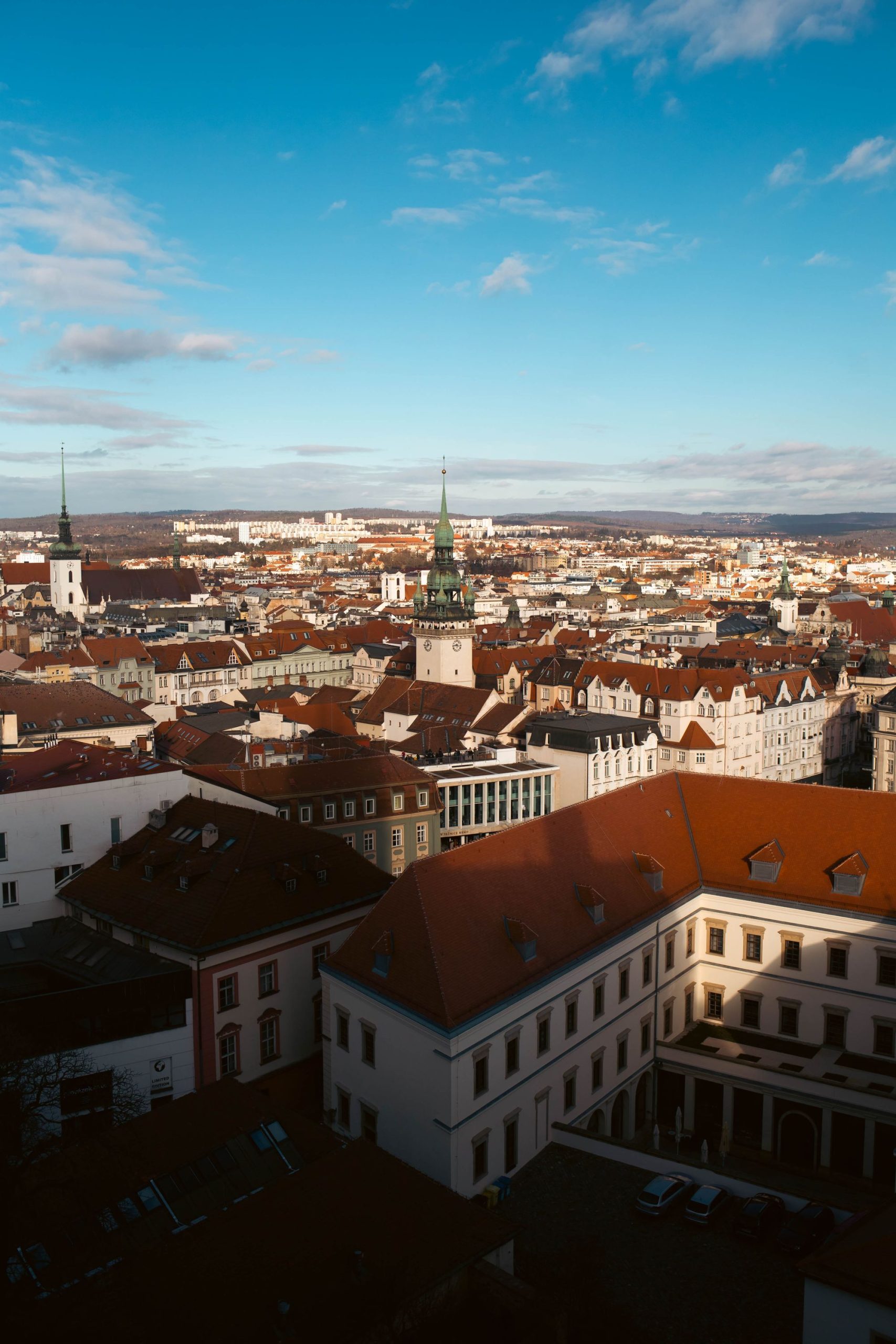
Compare the complete seven-night basket for the same traveller, room type and acceptable conditions. Include taxes, linen, mandatory fees and the transport needed to reach it. A distant bed that requires extra fares is not an €8 saving simply because the booking headline is lower. Check arrival/check-in times, luggage arrangements and cancellation conditions too.
If the suitable €36 average is not available for your dates, the saving does not exist. Do not put the desired price into the sheet as though it had been found. Try other dates, a different split of nights or a shorter journey, then price it again.
Change two: remove one optional paid visit
In the example, we remove the €24 visit from the local travel, visits and extras allocation. That line becomes €40, and the plan moves from €812 to €788 allocated, including the same €80 contingency. Food remains €176 and the rail allocations remain €240 across access, return and the internal journey.
The €12 left under the €800 limit is unallocated headroom. It is not the contingency, and it is not evidence that the trip costs exactly €788. The money held aside may not be spent; the actual bill depends on the real bookings and choices.
Replace the visit with something you would enjoy and can genuinely do without that ticket: a neighbourhood walk, time by the river or a slower afternoon. Do not remove the one experience that was the reason for travelling merely to preserve the original number of days. In that situation, a shorter trip may be the better design.
Compare tickets and passes over the same journeys
Search Berlin → Prague, Prague → Brno and Brno → Berlin as individual tickets, then compare an eligible pass plus reservations and uncovered transport for that same set of journeys. Do not compare the price of one internal ticket with a pass covering much more of the holiday. Equally, do not charge a pass journey twice in the access line.
České dráhy’s train-bound ticket conditions explain that the specified compulsory train matters. A lower fare with restrictions and a more flexible ticket are different products. Record the conditions with the price, rather than treating a cheaper headline as the same deal.
Residence is relevant to pass eligibility and home-country travel. Interrail’s One Country Pass guidance says you cannot buy one for your country of residence. A Czech One Country Pass would not by itself cover the whole Berlin-to-Berlin journey. Check the exact pass, operators, reservations and border sections before comparing totals. No pass price or winner is assumed here.
Test what happens when a real quote changes
If getting there and home turns out to require €210 rather than the assumed €180, the revised €788 plan becomes €818. It no longer fits. The accommodation and optional-visit changes still reduced the allocation by €80, but that does not make the final itinerary affordable.
This is the useful habit: update the whole plan when one input changes. Compare moving the dates, using a different gateway, reducing a night or selecting a closer pair of bases. Recheck food days and any altered journey when you do. Keep conditions comparable and do not spend the contingency to hide a structural shortfall.
Turn the exercise into your own booking plan
- Start with the actual money available and decide what stays protected.
- List the complete journey from home to home, dates, nights and required extras.
- Obtain comparable, available accommodation and transport prices; keep the conditions and quote date.
- Change one decision, recalculate the whole trip, then decide whether the trade-off is worthwhile.
- Book only once the real total and practical travel days work for you.
If you want help organising the days and connections, see the Rail Trip Planner example. The service plans train trips around Europe; the worked figures in this guide are not an offer or a quote for that service.
Photos: Thomas Ronveaux and Eugenia Sol / Pexels. Budget diagrams: Rail Trip Planner. Pexels.
 Europe Train Trip: Circular Route or Finish in a Different City?
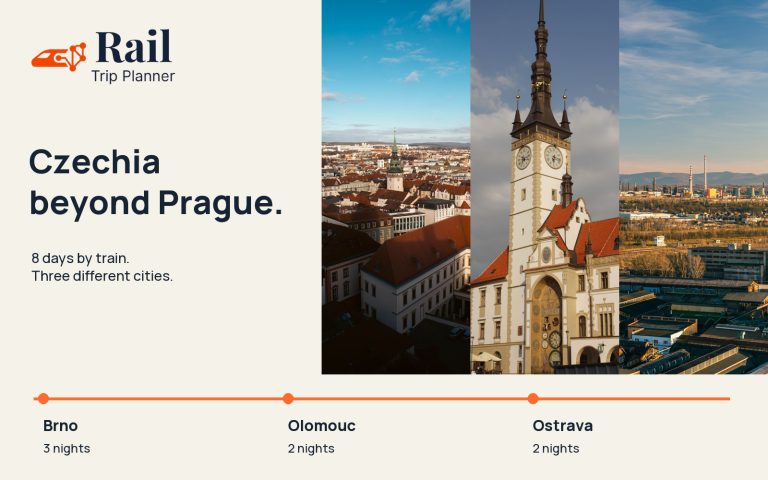 Czechia by Train beyond Prague: An 8-Day Brno, Olomouc and Ostrava Route
 Portugal by Train in 12 Days: Porto, Lisbon and Lagos Without a Car