
How Many Cities Fit in a Europe Train Trip? Count Usable Time
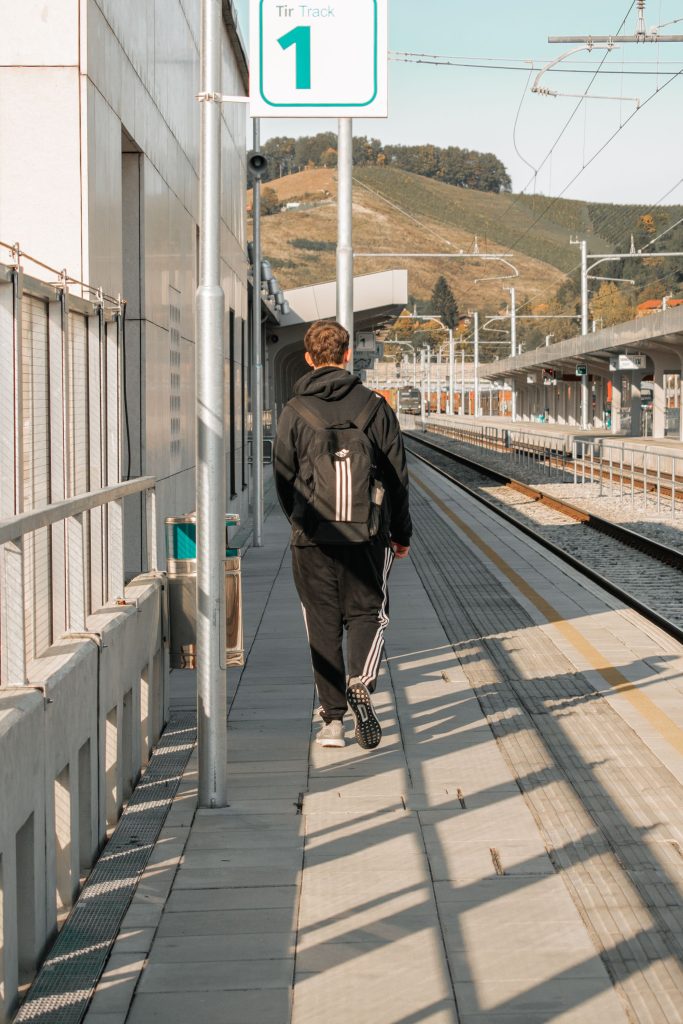
A four-hour train is not necessarily a four-hour travel day. Before choosing the number of cities for a Europe train trip, count what happens on either side of the railway journey: leaving your room, reaching the platform, getting to the next accommodation and being ready for your first visit.
There is no useful universal answer such as “one city every two days”. Two travellers can make the same route work differently. The better question is what the next stop replaces in your own holiday. This guide uses invented examples, not a dated itinerary, to help you answer it.
Start with nights and the actual holiday window
Write down your arrival day, departure day and the accommodation nights between them. Nine calendar days can contain eight nights, without containing nine full sightseeing days. Arrival at midday and arrival late at night give you different first days. An early flight home and an evening train home give you different last days.
Include the journey from home and back inside your real leave allowance. If reaching the first city requires another night, that night must be added to the budget and available dates, or taken from somewhere else. Do not treat it as time outside the holiday that somehow costs nothing.
For each base, distinguish full days without a move from partial days. A transfer day may still give you a worthwhile evening. Calling it a transfer day does not mean that it is entirely lost.
Count the whole move, not just the train
The following is an invented time calculation. None of these clock times identifies a real service, a required boarding buffer or a hotel’s check-in policy.
| Step | Illustrative time | Allowance |
|---|---|---|
| Leave room and reach station | 08:30–09:00 | 30 minutes |
| Time at station before departure | 09:00–09:30 | 30 minutes |
| Train journey | 09:30–13:30 | 4 hours |
| Arrival station to accommodation | 13:30–14:00 | 30 minutes |
| Bags or check-in | 14:00–14:30 | 30 minutes |
That is six hours from leaving the room to being ready for the first visit. Meals, a rest or a later room-access time may change the outline. You might eat on the train or leave bags before the room is ready; do not automatically add every task twice.
Use the station named on the actual ticket, not just the city name. Check the walk or local transport at both ends, luggage arrangements and access needs. The example’s thirty minutes at the station is an assumption, not advice that applies to every departure. Follow the operator’s instructions for your train.
SBB Mobile’s official functions include door-to-door guidance and walking routes. DB Navigator also supports walking directions and adjustable transfer time. Use the operator or local planner relevant to the actual journey rather than borrowing another city’s timing.

Compare two ways to share the same eight nights
Both options below last nine calendar days and eight accommodation nights. A, B and C are unnamed bases: no route, fare or train duration is being promised. Arrival, departure and base-changing days are excluded from the count of full days, even though they may allow some sightseeing.
| Option | Night split | Base changes | Full days without a move |
|---|---|---|---|
| Two bases | A 4 + B 4 | Day 5 | 6: days 2, 3, 4, 6, 7, 8 |
| Three bases | A 3 + B 3 + C 2 | Days 4 and 7 | 5: days 2, 3, 5, 6, 8 |
The third base adds another move and removes one uninterrupted city day in this comparison. It may still be the right choice if it gives you a priority visit, a particular evening or a more sensible onward journey. The two-base plan is not automatically better. What matters is whether that benefit is worth the packing, transfers and altered rhythm for you.
These counts concern the calendar only. They do not make either option feasible for every set of destinations. Insert actual trains and accommodation access before treating your own version as bookable.
A day trip is different from another base
An excursion can let you see another place while keeping the same room. It avoids another check-out and check-in, but the outward and return journeys still use time and money. Check the return before arranging the visit, especially if the last convenient service is early.
Changing base can make sense when you want an evening there, when the next destination lies further along your route, or when returning would repeat a long journey. Compare the two patterns rather than assuming every extra city should be a day trip.

Give each stop a reason and some usable time
Choose what you most want from each place: a museum, food, a walk, nightlife, seeing a friend or simply time by the water. Then check opening days, reservation slots and the distance between the station, room and that priority. A famous name on a map does not tell you whether the visit fits.
Leave room for the pace you actually enjoy. A long scenic train ride may be part of the experience rather than wasted time. Equally, an interesting ride does not remove the need to eat, sleep and handle your bags when you arrive.
If one must-do visit falls on a transfer day, work backwards from its entry time using the real journey and a sensible margin. If the plan only works with every stage running perfectly, move the visit or reconsider the stop.
Audit your route before adding the next city
- Count the accommodation nights and confirm they match your dates.
- Mark arrival, departure and every change of base.
- Add both last-mile journeys, station time and bags/check-in.
- Separate uninterrupted days from partial days.
- Check your priority visits against opening days and booking requirements.
- Ask what the extra stop replaces, including money and energy.
- Recheck trains and planned works for the actual travel date.
SBB’s timetable help explains timetable searches and connection information. A general example cannot replace a date-specific search, especially when works or seasonal changes affect your journey.
Want to talk through a draft? You can share it in #rate-my-route in Interrail | Backpack Europe. English is the common language. Include dates or duration, nights per base, your rough budget and the part you are unsure about.
For a personalised Europe train itinerary, explore Rail Trip Planner. Start with your available time and priorities; the city count follows from those choices.
Photos: Niko Pečnik, Malte Luk and Adrien Olichon / Pexels. Illustrative calculations: Rail Trip Planner. Pexels.
 A Relaxed Netherlands Train Itinerary: 7 Days in Utrecht and Haarlem
 Europe Train Trip: Circular Route or Finish in a Different City?
 Plan a Rail Trip Day with a Map: Station, Base and Nearby Stops