
First Train Trip in Europe: 14 Questions Answered

You do not need to understand every railway system before planning your first train trip in Europe. Start with the route, check what your chosen trains require, then prepare the details for departure. These are editorial questions written by Rail Trip Planner, with short answers and links where you need more detail.
Available days, start and finish, a few priorities.
Individual tickets, a suitable pass and any extras.
Journeys and stays that shape the trip.
Documents, valid tickets, luggage and station details.
Before you buy
Where should I start with the route?
Write down your available days, where you can realistically begin and finish, and two or three experiences you want most. Then arrange a small number of bases in a sensible order. Include the time spent moving between them, rather than counting every travel day as a full day of sightseeing. For a concrete example, see our two-week route through Paris, Amsterdam, Berlin and Prague.
Do I need a rail pass?
No. A pass is one option, alongside individual tickets. Compare the journeys you actually intend to make, the terms of the available fares and the cost of any required reservations. Your route should help determine the ticket choice. Our pass versus individual tickets guide explains the comparison without assuming that a pass always saves money.
Does every train need a seat reservation?
No. Some services require one, while others do not. A rail pass and a reservation are different things; where a reservation is required, the pass alone may not be enough. Check the selected train before relying on it, and read our seat-reservation guide for the next steps. A suggested train in an itinerary is not a booked seat.
Do I have to plan every hour?
No. Fix the journeys, accommodation and activities that constrain the rest of the trip, then leave gaps for food, rest and exploring. Put the experience you care most about on a day with enough time. If you travel with someone who likes different things, our guide to planning a trip as a couple gives a way to keep both sets of priorities visible.
What if the tickets are not on sale yet?
Keep working on the route, but treat unconfirmed departures as provisional. An empty search result does not by itself prove that the route has disappeared or sold out. Check the operator’s booking information and revisit your date. Avoid building non-refundable plans around a connection you have not confirmed. Use our guide to tickets not yet on sale rather than guessing one release date for all trains.
What belongs in the budget besides the train ticket?
Include your journey to the starting point and home from the finish, accommodation, food, local transport, any reservations and activities you choose. Keep a separate amount available for changes. There is no honest universal daily total for every traveller and route. Compare the whole trip at a pace you can afford, rather than choosing a route solely because one train looks cheap.
Before you leave
Which identity or travel documents should I carry?
Carry the valid travel document required for your citizenship and all countries on your route, including transit. A train ticket is not a travel document. Check official entry guidance for EU nationals or non-EU nationals as applicable; do not assume that a driving licence or a photo of an ID will replace the required original.
Will a screenshot of my ticket be enough?
Not always. Use the format accepted by the operator: this may be a printed ticket, an approved PDF or a ticket opened in an app. Some digital tickets have changing elements. Keep the booking reference and access instructions available, charge your phone and arrange an accepted backup where possible. A payment receipt is not automatically the ticket you must show.
Do I need to validate my ticket?
It depends on the product. Follow the instructions for that exact ticket. For example, Trenitalia distinguishes regional paper, electronic and digital tickets: regional paper tickets need validation before boarding, while Digital Regionale tickets activate automatically. Do not apply a remembered rule about stamping or manual check-in to every ticket you buy.
At the station and on the train
How do I find the right train and platform?
Check the exact departure station, travel date, train number and destination against the current departure information. A city can have more than one station, and platforms can change. If unsure, ask staff before boarding. Follow the operator’s arrival and boarding guidance; journeys with security or border procedures need more preparation than simply walking to a platform.
What happens to my bags?
Choose luggage you can manage and check the operator’s size and storage rules. For example, Eurostar asks passengers to carry and store their own luggage; this is not a universal allowance for other operators. Keep access routes clear. Our practical packing guide helps you think about moving your whole bag between stops.
If you need help
What should I do if I miss a connection?
Keep your tickets and delay information, then ask the operator or station staff about onward options. Do not assume you can board another train free of charge. The EU rail passenger-rights guidance explains why the ticket contract matters, including the distinction between through-tickets and separate tickets.
Which information should I keep easy to reach?
Keep your valid ticket or its accepted access method, booking reference, accommodation address, route details and operator contact information together. Save useful notes offline, but follow the ticket’s own display requirements. Do not plan around guaranteed station Wi-Fi or a working phone battery. Share the basic route with someone you trust if that makes you more comfortable.
Can Rail Trip Planner book the trip for me?
Rail Trip Planner provides planning recommendations for train trips across Europe, not ticket or hotel bookings. The service costs €29 per itinerary and provides a personalised PDF plan and trip map. You book and pay for transport, stays and activities directly with the providers. A plan gives you a structure to work from; availability still needs checking when you book.
Your first departure: a short check
Correct station and date · valid ticket in the accepted format · required travel documents · manageable luggage · boarding instructions · a way to retrieve your booking.
Check the details for your own journey
Rules vary by service and ticket type. The official sources linked above were checked on 27 October 2026. Confirm the instructions for your date before departure. This overview points you to the relevant checks; the linked specialist guides cover the longer explanations.
 Rail pass or individual tickets?
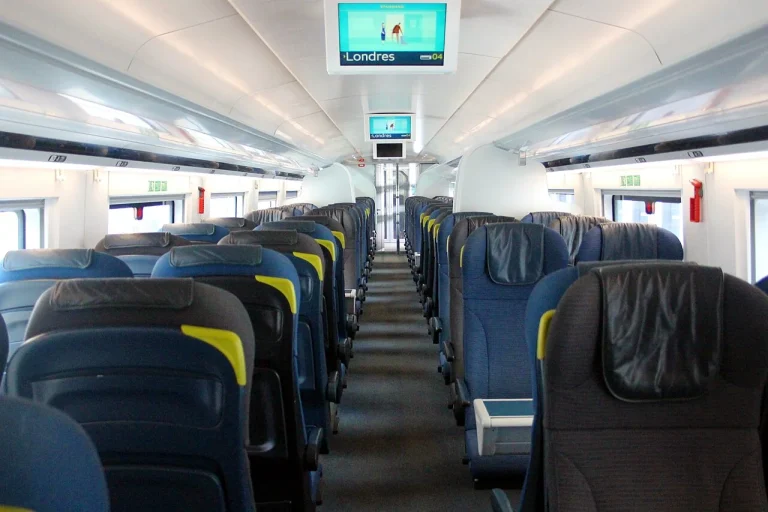 Understand seat reservations
 Train tickets not on sale yet?