
Poland by Train: A Two-Week Route Through Four Cities
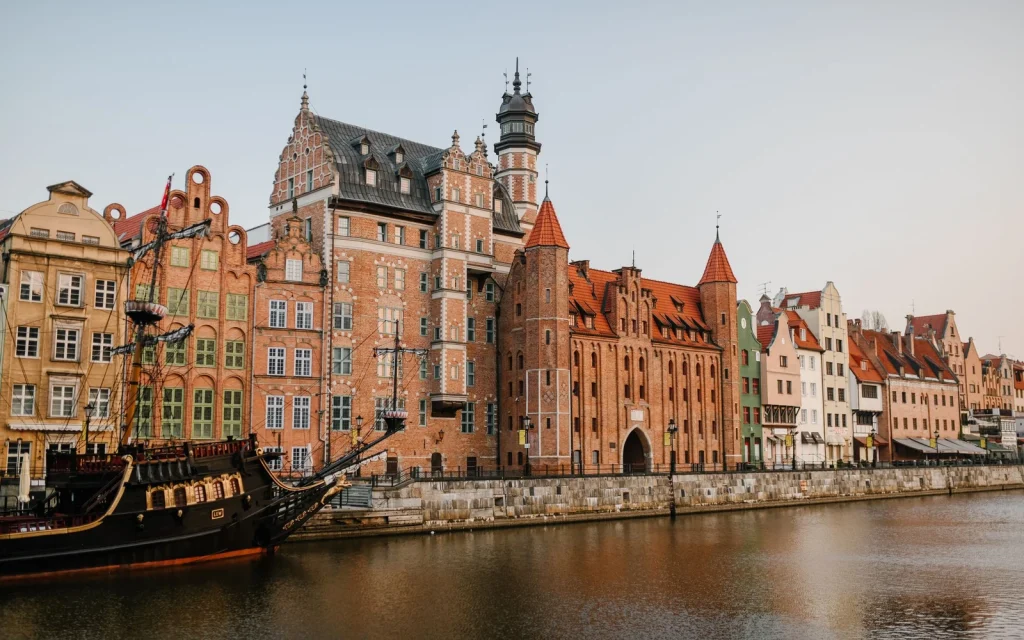
For two weeks in Poland by train, try Gdańsk → Warsaw → Kraków → Wrocław: four bases, thirteen nights and three main moves. Start by the Baltic, spend time in the capital, give Kraków an extra day, then finish among Wrocław’s squares, islands and bridges. You get variety without packing up every morning.
The suggested split is 3 nights in Gdańsk, 3 in Warsaw, 4 in Kraków and 3 in Wrocław. Arrive on day 1, change base on days 4, 7 and 11, and leave on day 14. This is an open route: getting to Gdańsk and travelling home from Wrocław are additional arrangements, not included tickets. If those journeys require another overnight stop, extend the trip rather than squeezing the sightseeing.
A two-week Poland train itinerary, at a glance
This route suits a first visit focused on cities, cafés, food, waterfront walks and one optional excursion. It is not a tour of every Polish region, a beach holiday with guaranteed sun or a mountain-hiking itinerary. Four bases give you time to enjoy neighbourhoods as well as the famous squares.
| Days | Base | Nights | Usable sightseeing time |
|---|---|---|---|
| 1–3 | Gdańsk | 3 | Two full days, plus whatever remains after arrival. |
| 4–6 | Warsaw | 3 | Two full days, plus the transfer day. |
| 7–10 | Kraków | 4 | Three full days, plus the transfer day. |
| 11–14 | Wrocław | 3 | Two full days, plus transfer and departure time. |
Three nights do not mean three complete sightseeing days. Protect arrival and transfer time when you add activities. A morning train still involves checking out, reaching the station, finding your accommodation and dealing with luggage.
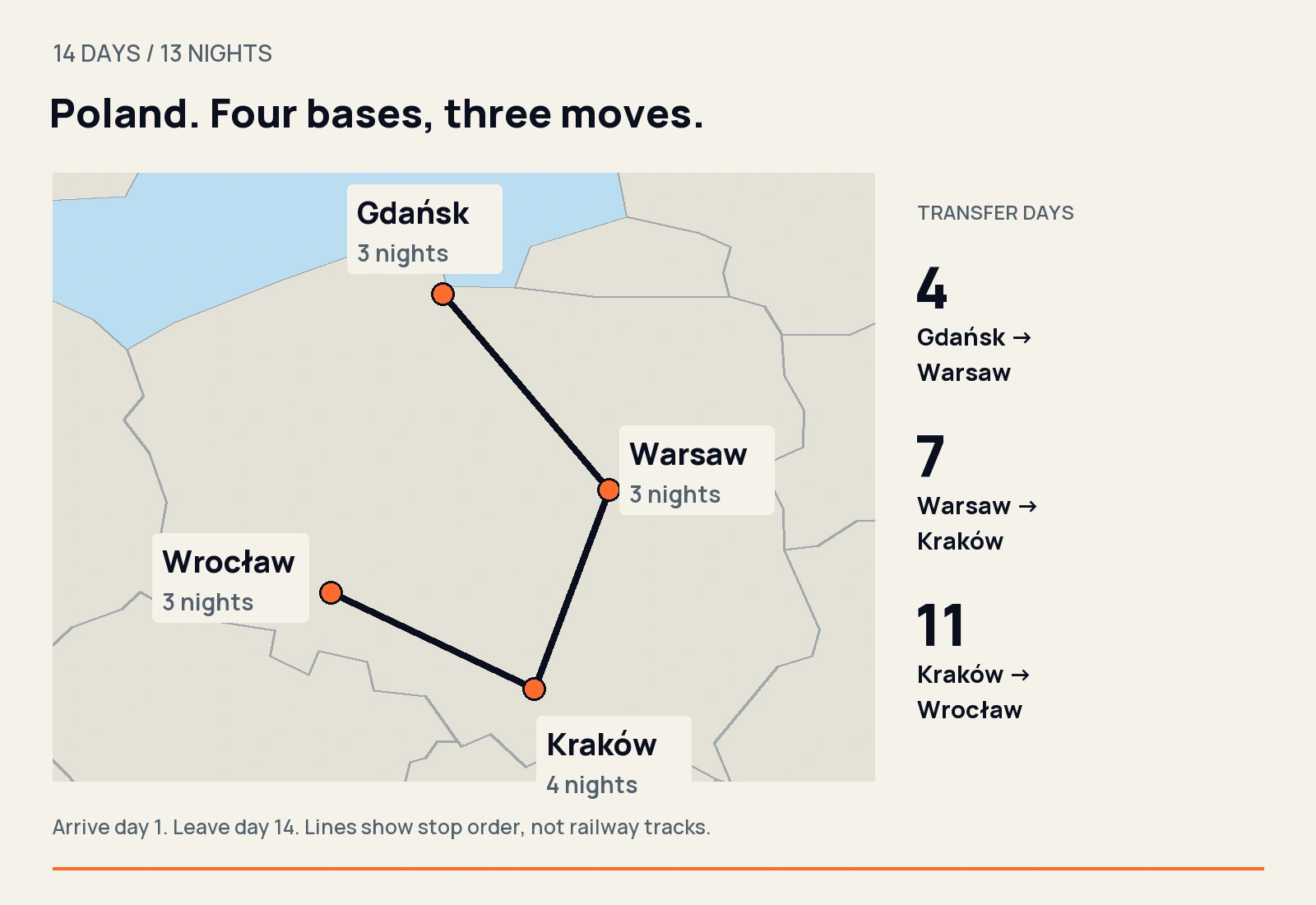
How to plan the three main train journeys
Search the Polish station names, even if your accommodation uses English names. Use Portal Pasażera, the railway infrastructure manager’s journey planner, for timetable checks, then confirm fares and conditions with the operator. PKP Intercity is a starting point for long-distance services; regional journeys may involve another operator.
| Day | Search these stations | Planning decision |
|---|---|---|
| 4 | Gdańsk Główny → Warszawa Centralna | Compare the actual category, arrival station and price. Avoid choosing solely by the earliest departure. |
| 7 | Warszawa Centralna → Kraków Główny | Choose a daytime service that leaves a manageable arrival afternoon. |
| 11 | Kraków Główny → Wrocław Główny | Check direct and connecting options for your date before fixing an activity in Wrocław. |
These are station pairs to investigate, not reserved services. Direct options exist on the main corridors, but construction work, timetable changes and your departure time can alter the result. We have not selected dated departures for this suggested trip. Keep roughly half a day flexible for each change of base; that is a planning allowance, not a claim about time on board.
For orientation, Poland Travel’s timetable guide gives typical fast-train examples of about 2 h 50 between Warsaw and Gdańsk and 2 h 20 between Warsaw and Kraków. They are examples, not promises for your travel date or every train. Verify the selected service, including the Kraków–Wrocław leg, in the current planner.
Do not treat Warsaw as one interchangeable station
Centralna, Wschodnia and Zachodnia are different stations. A search result may use another Warsaw station because of the route or engineering work. Check the exact arrival and departure names and how you reach your accommodation. The day 4 and day 7 searches above are a useful starting point, not an instruction to ignore other valid services.
Days 1–3: Gdańsk, the waterfront and a Baltic option
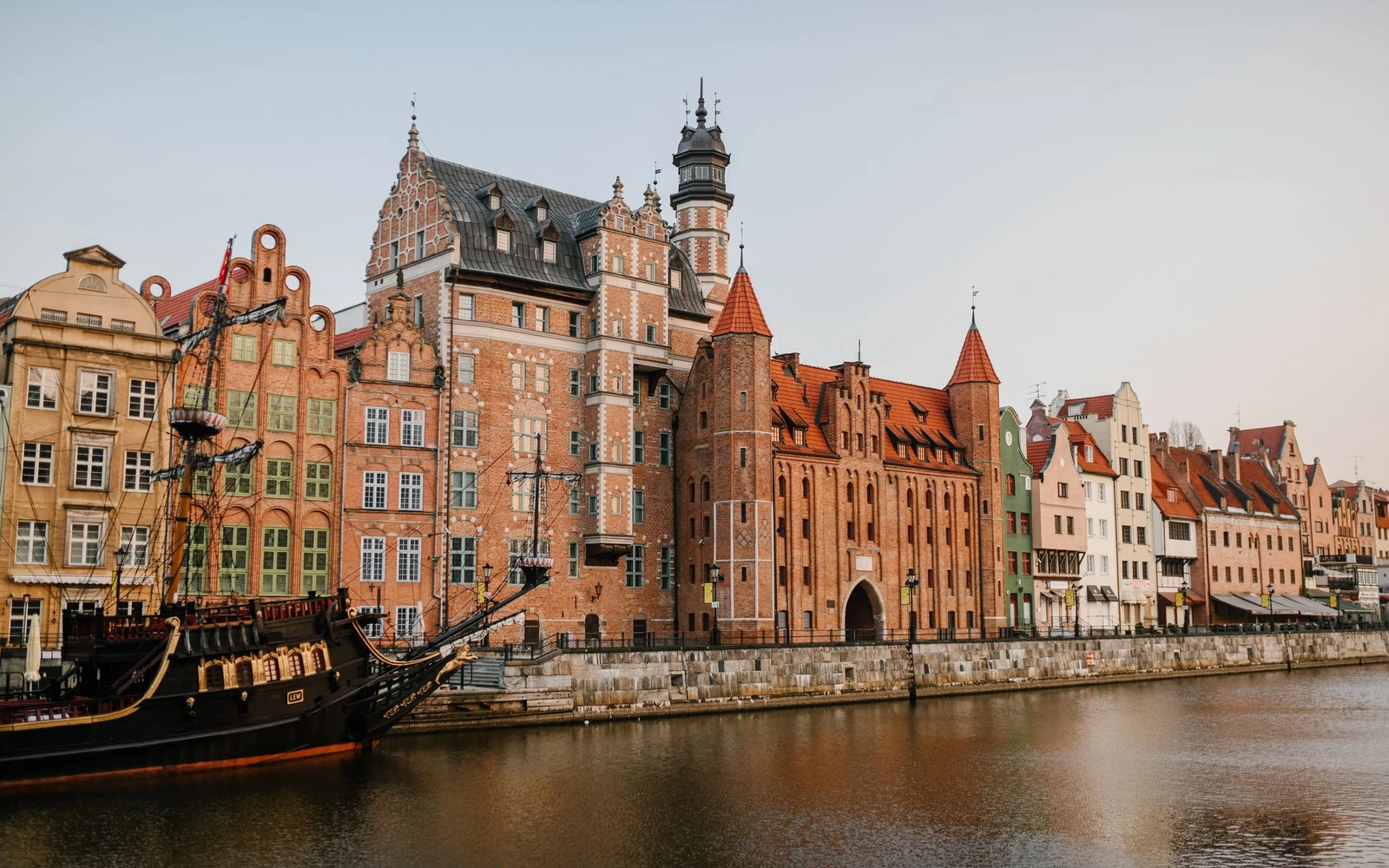
On day 1, settle in and take a short walk by the Motława if your arrival allows. Stay in or near the Main Town for easy evening walks, or choose somewhere with a practical connection to Gdańsk Główny. Check the actual walk with luggage rather than relying on an accommodation listing’s broad “central” label.
Use day 2 for Długa Street, Długi Targ and the waterfront, with time for cafés and a meal. On day 3, choose between more of Gdańsk—such as the shipyard area and the European Solidarity Centre—or a coastal outing to Sopot. You do not need to fit every museum and the whole Tricity into two days.
The national tourism guide to Gdańsk and its Tricity guide help you choose the mix. For Sopot, check SKM’s current services and tickets. A city bus or tram ticket does not automatically cover every regional train. Treat the beach as weather-dependent and check any pier admission separately.
Days 4–6: Warsaw beyond one old-town photograph
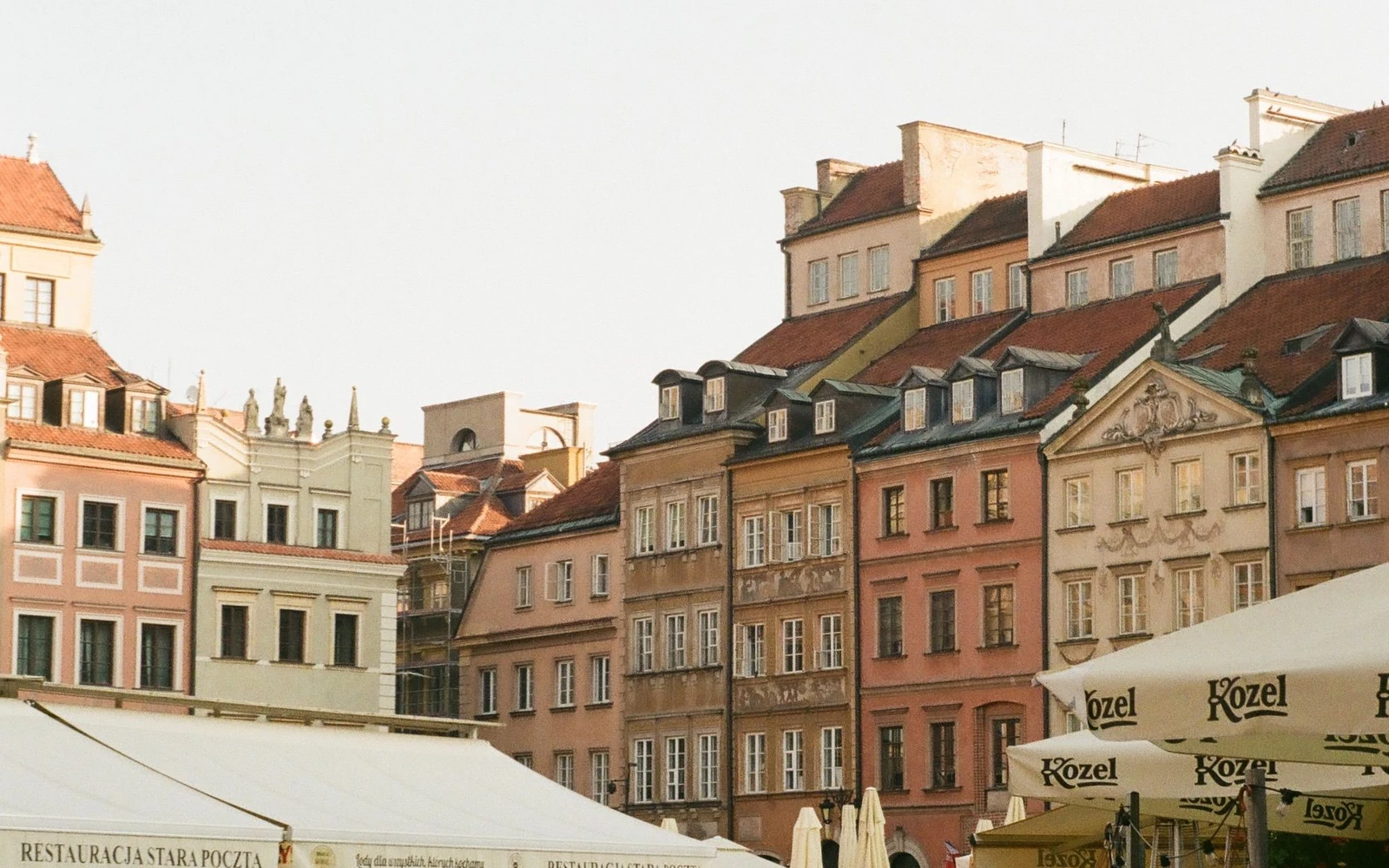
Travel on day 4 and keep the arrival plan light. Central Warsaw can be convenient for the next train, while another neighbourhood may suit your evenings better. Compare the full door-to-door journey and the cost of local transport before choosing.
On day 5, combine the Old Town and a section of the Royal Route, with an indoor visit if it matches your interests. Use day 6 for a different side of the city: Łazienki’s parkland, a neighbourhood food stop or a walk along the Vistula. Choose a compact combination instead of crossing the city repeatedly.
The official Vistula Boulevards guide is useful for the riverside. Boats, beach facilities and outdoor venues are seasonal; do not build a winter afternoon around a summer photograph. If the weather turns, swap the outdoor block for a museum or café rather than adding a fourth hotel.
Days 7–10: Kraków with an extra day to choose your pace
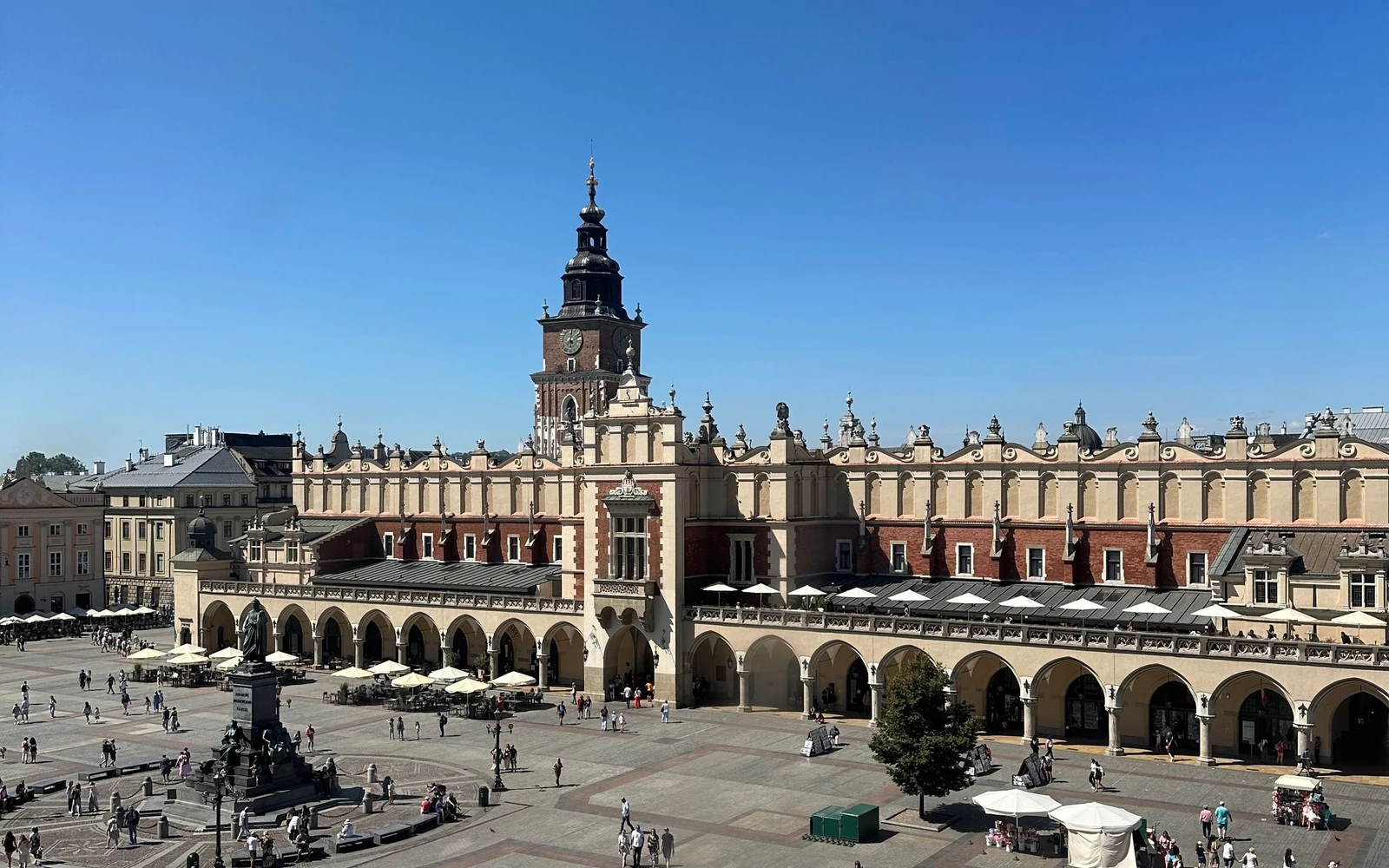
Arrive on day 7, check in and explore a small area near your base. Day 8 works well for the Main Market Square and the streets towards Wawel. Walking around the area is different from booking an interior visit: check the attraction’s own admission and opening arrangements.
Spend day 9 in Kazimierz, with time for food and cafés, then cross towards Podgórze if you want a longer walk. Kraków’s tourism office suggests a Wawel–Kazimierz–Podgórze route; use it as inspiration, not a list to rush through.
Day 10 can be a slower city day or a visit to the Wieliczka Salt Mine. Koleje Małopolskie lists the rail connection from Kraków Główny to Wieliczka Rynek-Kopalnia. The train and the mine visit are separate arrangements. Book the desired visit, language and time with the mine’s official site, check the route from the station and leave time for the return. Review stairs, walking and accessibility information for the specific tour before committing.
Days 11–14: Wrocław, islands and an unhurried finish
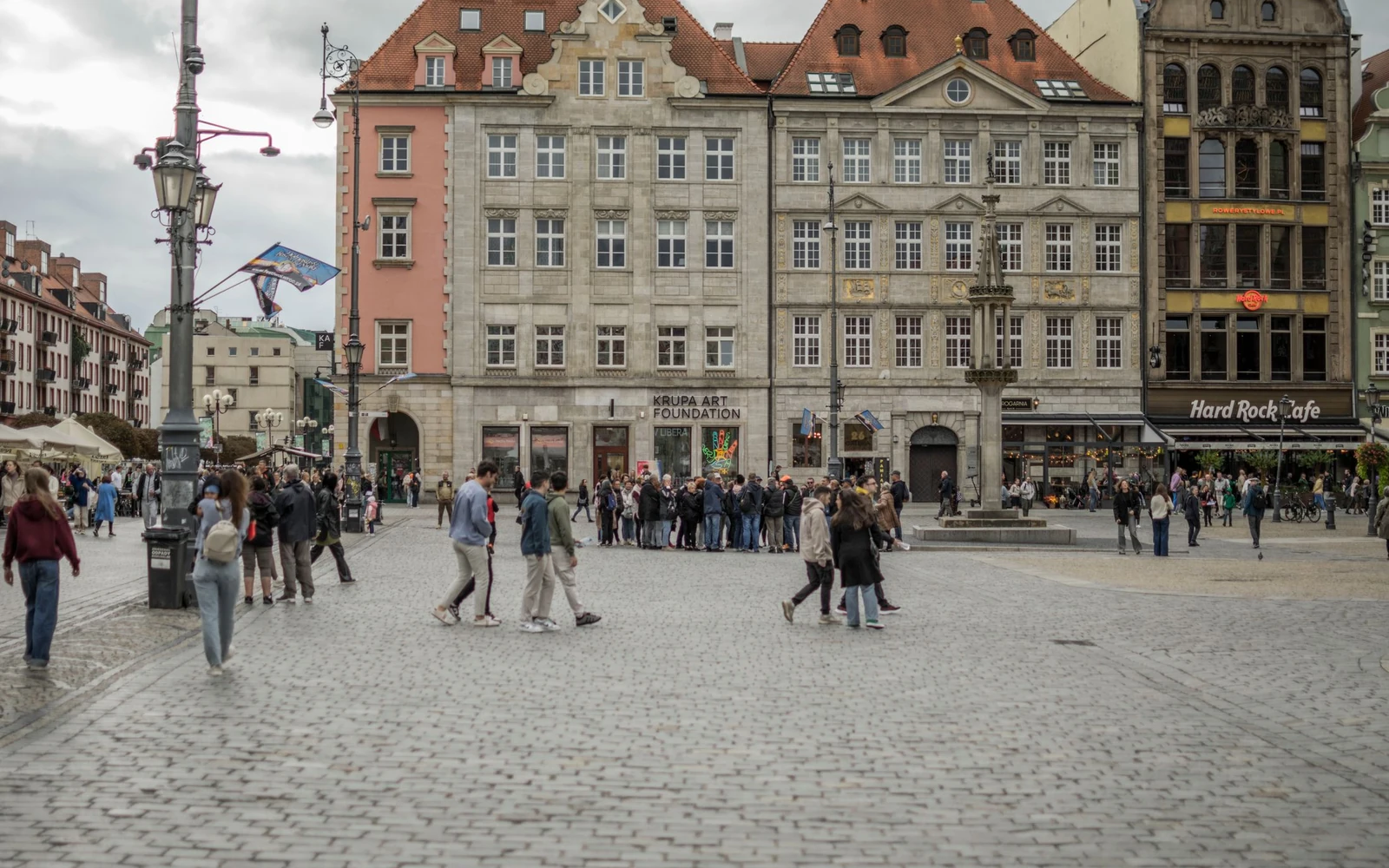
Move on day 11. The city’s official rail-arrival guide places Wrocław Główny roughly 15–20 minutes on foot from the Market Square. That is an orientation estimate, not a guarantee with luggage, mobility needs or a different hotel; trams and buses may be more convenient.
Use day 12 for the Rynek area and a relaxed search for the small dwarf sculptures. On day 13, explore the riverside and islands towards Ostrów Tumski, or choose an indoor interest. The tourism office’s dwarf directory lets you make a small route instead of treating the whole city as a scavenger-hunt checklist.
Leave on day 14. Check the airport or onward station connection, and avoid a non-refundable morning attraction if the departure logistics are not settled. If homeward travel works better from another city, price that extra leg before booking the full route.
Individual tickets or a rail pass?
Start by pricing the three main journeys separately. There is no automatic reason to buy a multi-day pass for three intercity moves. Compare the real dates, departure times, class and change/refund conditions. Add the cost of getting to Poland and travelling home before deciding what any pass would cover.
If you already hold a European rail pass, check the operator and exact service, travel-day use and any reservation or supplement. An EIP is not interchangeable with an IC just because the endpoints match. Pass coverage does not automatically include city transport, the Sopot outing or the Wieliczka trip.
Check the selected train’s reservation rules
EIP services require advance reservations; passholders also need the applicable supplement. For other train categories, check the selected service rather than assuming all Polish trains follow one rule. A normal ticket may include an allocated seat, while a passholder may need a separate document. Read what your purchase actually includes, and do not count on sorting out an EIP reservation after boarding.
We deliberately do not quote a universal reservation price. Use the operator’s current conditions and the published EIP passholder conditions where relevant. Keep ticket or pass, reservation and identification available. If a journey is not on sale yet, our guide to tickets not yet on sale explains what to check before assuming cancellation.
Build the budget around thirteen nights, not just train fares
Use Polish złoty (PLN) when comparing local quotes. Keep euro amounts separate until you apply the exchange rate and charges relevant to your payment method. A “cheap Poland trip” headline is not a budget for your dates.
- Accommodation: thirteen nights, noting whether the quote is per person or per room. Check taxes, breakfast and cancellation terms.
- Transport: three main rail journeys, arrival and return, local transport, optional Sopot/Wieliczka journeys and any required reservations.
- Daily spending: fourteen days of meals and ordinary expenses, adjusted for late arrivals or early departures.
- Extras: attraction tickets, luggage storage, insurance and a contingency. A mine tour or boat trip is not included simply because it appears in the itinerary.
Choose accommodation that supports your travel style: practical station access and sleep matter as much as a photogenic address. No hotel is recommended here as booked, available or guaranteed quiet. Keep your luggage manageable; the winter packing guide can help if you travel in colder months.
When to go, and how to shorten the route
Late spring and early autumn are sensible starting points if you want walking time without building the trip around beaches. Summer gives you more scope for coastal and riverside activities, but availability and weather still need checking. In winter, shorten outdoor blocks and allow indoor alternatives; our daylight planning guide explains why the time of the actual landscape section matters.
For ten days and nine nights, drop Gdańsk and use Warsaw 3 → Kraków 3 → Wrocław 3, with moves on days 4 and 7 and departure on day 10. That keeps two full days per base. Do not keep all four cities and simply remove the rest days unless you actively want a faster trip. Reverse the two-week route if your arrival and return work better that way, after checking the opposite-direction trains.
Poland by train: common questions
Can I do this route without hiring a car?
Yes: the four main bases are linked by rail, with local transport and walking for the city sections. This does not mean every attraction or accommodation is next to a station. Check the last part of each journey.
Is fourteen days enough for all of Poland?
No. It is enough for this four-base outline at the proposed pace. Mountains, lakes and further cities need extra time or a change to the route.
Are Sopot and Wieliczka extra overnight stops?
No. They are optional outings from Gdańsk and Kraków. Keep the existing accommodation and replace a city activity rather than adding another change of base.
Does a pass guarantee a seat on every train?
No. Coverage, travel days, class, reservations and supplements are separate checks. Check the chosen train before boarding and compare the complete cost against individual tickets.
Want a Poland train trip built around your dates?
Rail Trip Planner prepares a personalised itinerary PDF and trip map for €29 per itinerary. We can adapt the bases, pace and practical travel choices to your budget and interests. You book and pay for transport, accommodation and activities separately.
Sources and checks
Photography: Julia Volk, Anna Holodna, Jason Steele and SHOX ART / Pexels, used under the Pexels licence. Approximate route graphic: Rail Trip Planner; country outlines: Natural Earth. Photos illustrate the destinations, not conditions on your travel date.
 Germany by train: a two-week route
 Seat reservations: the practical checks
 Keep the scenic stretch in daylight