
Winter Scenic Trains: Plan the Best Views Before Dark
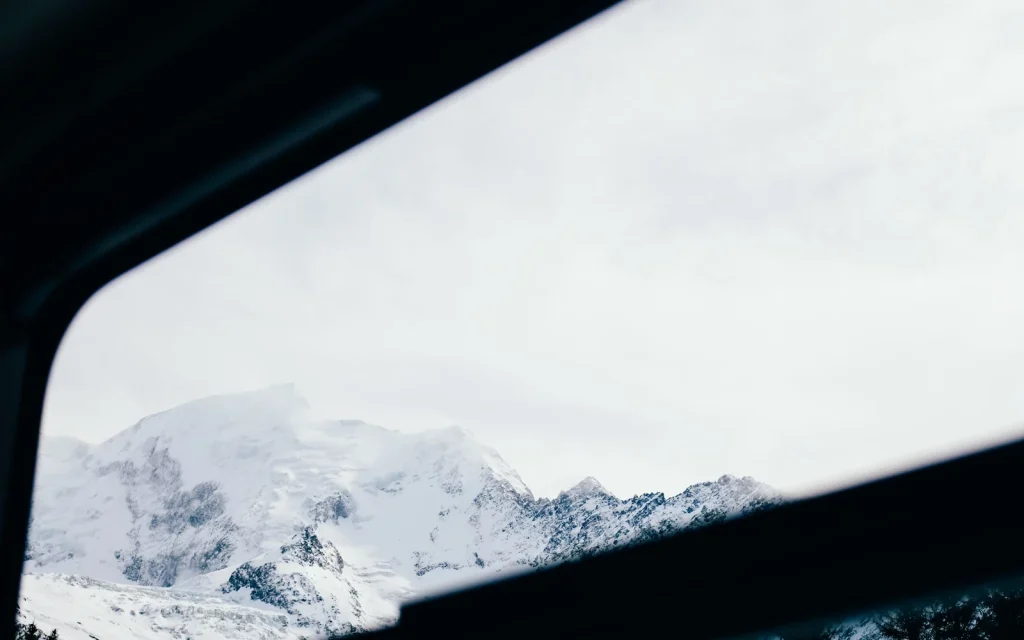
For a scenic winter train journey, put the landscape you care about inside the local daylight window—not merely the train’s departure. A service can leave while it is light and reach the mountain section after sunset. Another can leave at a convenient time but take a base tunnel that bypasses the views you expected.
Start with the exact date and the actual route, identify the part you want to see, then work backwards to a suitable departure. Keep flexible city time, meals and routine transfers around that decision. This guide shows how, using Lucerne to Bellinzona over the historic Gotthard line as a practical example.
The five-minute check before you book
- Choose the date. Use the day you will actually ride, not a summer photo or a generic winter timetable.
- Open the full train itinerary. Check intermediate stops and the route, including whether the train uses a mountain line or a long base tunnel.
- Identify your scenic section. Note where it starts and ends. The best views need not sit next to the departure station.
- Compare local times with daylight. Check sunrise and sunset near the section, not just at your accommodation. Give yourself room before the light fades.
- Check the whole day. Allow for getting to the station, connections, luggage, check-in and a workable alternative if plans change.
If two departures both work for your onward travel, choose the one that keeps the important outdoor section comfortably within daylight. You do not need the earliest train at any cost; you need a sensible window for the stretch you came to see.
Sunset is a reference point, not a guarantee of a view
Daylight, direct sunshine and visibility are different things. A valley can be in shadow while the sky is still light. Fog, cloud, snowfall and reflections from the carriage can reduce what you see. A published sunset time cannot tell you that a specific peak will be visible through your window.
Use a dated sunrise-and-sunset table for a nearby place as a planning reference. If your route crosses a large area, check points near the beginning and end of the scenic section. A sunset at your destination is not a minute-by-minute light forecast for the entire journey.
| Reference: Bellinzona, 15 December 2026 | Local time | How to use it |
|---|---|---|
| Sunrise | 07:59 | A dated daylight reference, not a promise of sun in every valley. |
| Sunset | 16:38 | Do not place the main landscape section against this deadline. |
| End of civil twilight | 17:13 | Some twilight remains after sunset; it is not equivalent to daytime sightseeing. |
Lucerne and Bellinzona use the same Swiss local time; in this December example it is CET (UTC+1). Elsewhere, compare each location in its own time zone. Do not apply a sunset from a city across a time-zone boundary to the departure clock without checking what each time means.
Leave room for the light to change
There is no universal “arrive thirty minutes before sunset” rule. A comfortable margin depends on the landscape, weather, the train’s progress and what you want to photograph. As a practical choice, favour a late-morning or early-afternoon crossing over a departure that relies on the last few minutes of daylight. Review that choice against the timetable for your date.
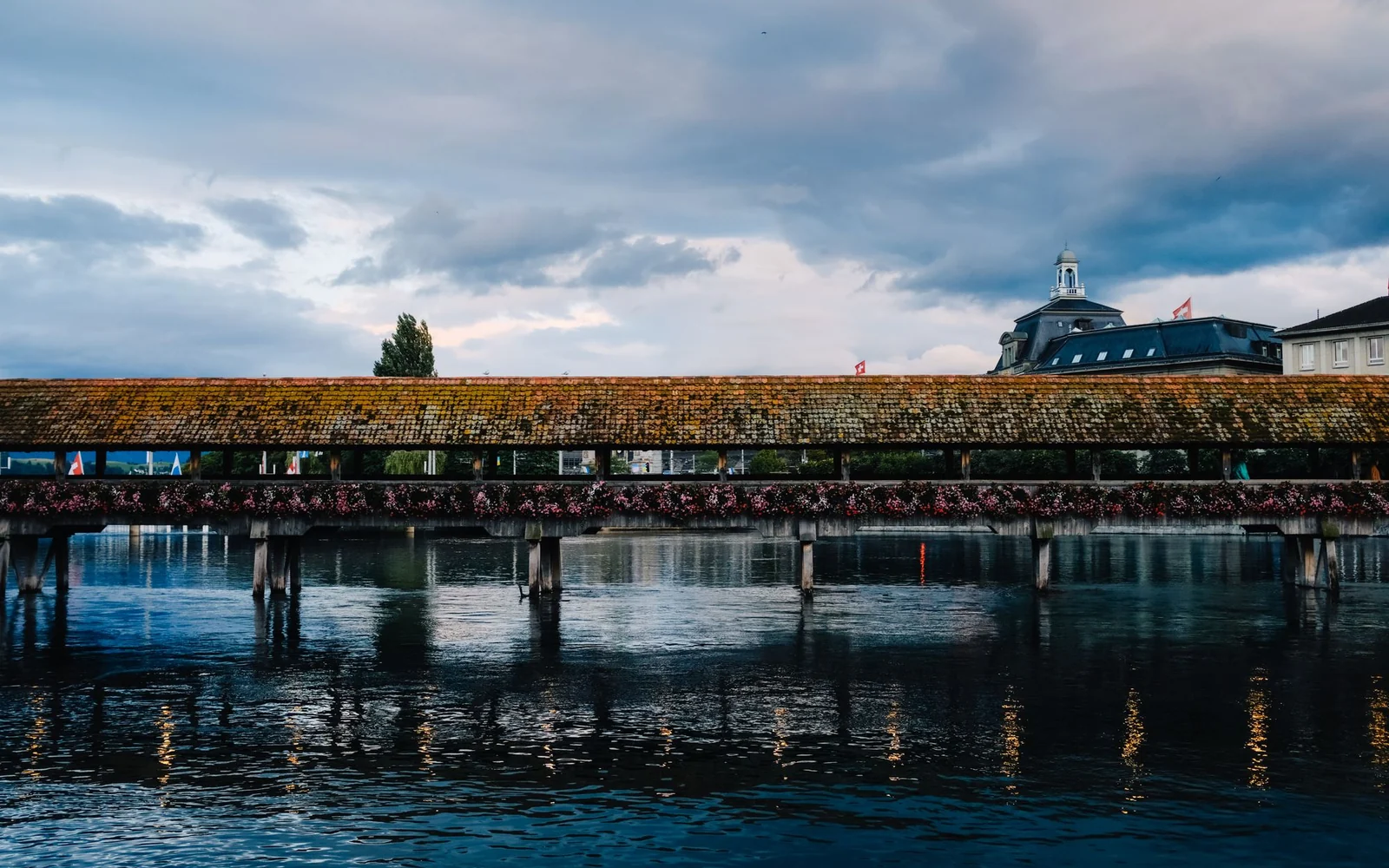
The Gotthard example: check the railway, not only the destination
For a Lucerne–Bellinzona journey, a search result showing the correct endpoints does not by itself confirm the historic panoramic route. There are different ways through the Gotthard region, and their purpose and journey time differ.
| Option | What to check | Winter planning decision |
|---|---|---|
| Treno Gottardo / historic mountain route | SOB’s service follows the Gotthard panoramic line. Open your specific connection and check the routing, including Göschenen and Airolo where shown. | A year-round option for this mountain corridor; verify the exact date, works and stop pattern. |
| Fast connection via the Gotthard Base Tunnel | Check the detailed itinerary. The long tunnel bypasses much of the high-level mountain railway. | Useful when travel time is the priority. A daytime departure does not turn it into the historic scenic route. |
| Gotthard Panorama Express | A separate branded train-and-boat experience with its own operating season and booking conditions. | Do not assume it runs in December. SBB lists a winter break; the 2026 season ran 18 April–18 October. |
SOB’s Treno Gottardo information describes the panoramic line and services connecting northern Switzerland with Locarno. Not every departure starts in Lucerne: read the individual itinerary rather than treating a headline frequency as a direct train from every origin every hour.
In the SBB timetable, search your date, open the connection and inspect the stops and notices. If necessary, compare a search via a station on the mountain route, such as Airolo. Then confirm the returned itinerary really follows the intended line; a search setting alone is not proof. Do not add an unnecessary stopover or a fragile connection just to force a route.
The old mountain line also has tunnels. Travelling on it does not mean an uninterrupted panorama. Equally, a base-tunnel connection can have attractive scenery elsewhere: the distinction is which part of the landscape you are choosing to travel through.
Same journey, two different places for the scenic block
The following times are invented planning blocks, not published departures or a verified three-hour train service. They illustrate how to reorder a Lucerne–Bellinzona travel day. Replace them with real connections before buying anything. The solar reference above is real and dated; the train blocks below are hypothetical.
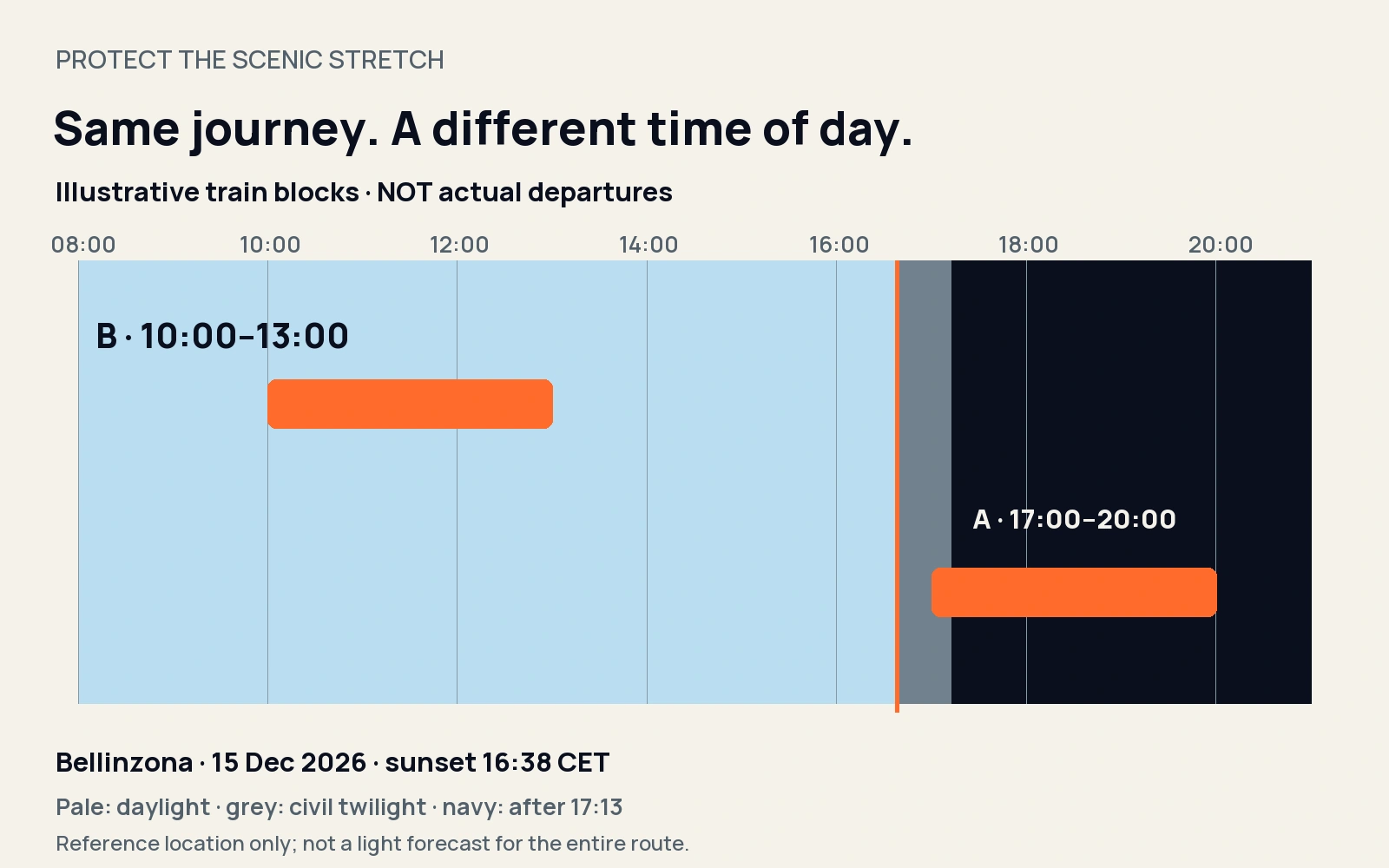
| Part of the day | A: scenery left until late | B: scenery protected earlier |
|---|---|---|
| Morning | Slow start, a flexible city visit and errands before travelling. | Breakfast, collect luggage and reach the station for a suitable daytime service. |
| Scenic block: hypothetical | 17:00–20:00. Begins after Bellinzona’s 16:38 sunset reference. | 10:00–13:00. Keeps the illustrative crossing well away from sunset. |
| Other flexible tasks | Already used the daytime window; arrival and check-in still follow the train. | Put a meal, check-in when available and flexible indoor time after the crossing. |
| What must still be checked | Real timetable, full route, arrival transport and accommodation. | The same checks, plus whether luggage can be stored before check-in. |
The improvement is not a magically shorter journey. It is deciding which activity needs daylight and giving it priority. If your morning commitment is fixed, the answer might be to travel the previous afternoon or stay another night—not to assume the next train will rescue the views.
Plan B is not a promise that every attraction or hotel will accept an early arrival. Check opening hours, luggage storage and check-in with the actual provider. Keep a small arrival plan that still works if you reach the destination before your room is ready.
Keep the daylight plan usable when connections change
A departure can fit your daylight target and still be a poor choice if reaching it depends on a tight incoming connection. Look at the train before the scenic train as well as the one after it. Include the walk from your accommodation, platform changes and the time your luggage needs.
- Check the next workable service. Would missing your first choice push the mountain section into twilight or darkness? If so, make that consequence visible in your plan.
- Read works and disruption notices. A replacement bus or diversion can change the journey, route and arrival time. Do not reuse last season’s screenshot as confirmation.
- Keep flexibility where it helps. An unbooked lunch is easier to move than a fixed attraction slot. Change the flexible task before sacrificing the day’s main landscape.
- Have a weather alternative. If visibility is poor, decide whether the journey is still worth doing for transport, or whether another day is realistically possible.
SBB recommends checking the online timetable or app again before departure, because changes can occur after your first search. Its timetable help explains connection settings and notices. A saved itinerary is a useful reference, not a guarantee that nothing will change.
Do not confuse a scenic route, a valid pass and a reserved seat
These are three separate checks. First choose the route and date. Then verify that your ticket or pass covers the operator, service and class you selected. Finally, check whether that service needs a seat reservation or supplement. A panoramic name does not automatically mean the same fare or reservation rules as a regular train.
For a flexible Interrail pass, also check which journeys consume a travel day before adding a scenic detour. This guide does not assume that every boat, local connection or mountain excursion is included. If you need the booking distinction, use our seat reservations guide.
Copy this daylight checklist into your itinerary
- Travel date and local time zone.
- Exact origin, destination and station names.
- Operator, service and intended route.
- Start and end of the scenic section you want to see.
- Sunrise and sunset references near that section, with place and date.
- Chosen connection, changes and current notices.
- Backup service and what it does to the daylight window.
- Ticket/pass coverage, travel day, class and reservation checks.
- Luggage, arrival transport and check-in plan.
Keep the source links next to the relevant decisions so you can check them again the evening before. This is more useful than a screenshot labelled only “best train”. For a wider trip, our ten-day Switzerland itinerary shows how to distribute bases without changing accommodation every night.
Questions about scenic trains in winter
Is the first train always the best choice?
No. A very early departure can put the first landscape section before sunrise, and a difficult start may add unnecessary pressure. Choose a connection that matches daylight where the views actually happen and still gives you a usable day.
Can I use the sunset at the final station for the whole route?
Use it as one reference, not a guarantee. Check places near the scenic section too, particularly on longer routes. Terrain and weather can affect the view well before the published sunset.
Can I take the Gotthard Panorama Express in winter?
Do not plan around it for December: SBB identifies a winter break. The year-round Treno Gottardo is a different option on the historic line. Check your actual travel date and connection rather than transferring the seasonal product’s schedule to another train.
Does travelling in daylight guarantee good photographs?
No. Weather, window condition, interior reflections, tunnels and the direction you face all matter. Daylight improves your opportunity to see the landscape; it does not guarantee a particular photograph or snow-covered view.
Want the journey arranged around what matters to you?
Rail Trip Planner creates a personalised PDF itinerary and a corresponding trip map for €29 per itinerary. We can organise dates, travel days and the order of your stops around priorities such as a scenic crossing in daylight. Tickets, accommodation and activities are booked and paid for separately by you.
Sources and what was checked
Checked 22 October 2026. Route and season information: SOB: Treno Gottardo, SBB: Gotthard Panorama Express and Switzerland Tourism. Planning method: SBB timetable help. Solar reference: Bellinzona, December 2026; terrain limitations: sunrise-sunset.org methodology. No dated train departure, connection or fare is being sold or guaranteed by the hypothetical comparison.
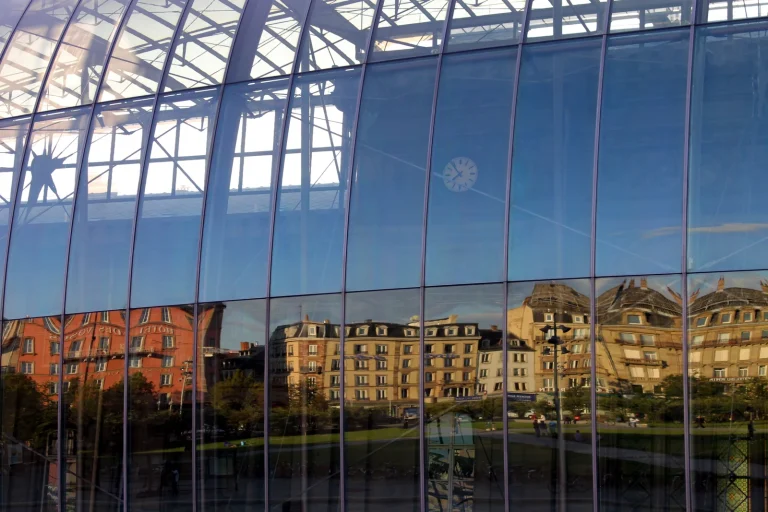
Photography: Adrien Olichon / Pexels, used under the Pexels licence. Winter-window image is illustrative, not identified as the Gotthard line. Diagram: Rail Trip Planner.
 Pack for a winter rail trip
 Christmas and New Year rail travel
 Switzerland in ten days by train