
Nice to Genoa by Train in Winter: A 7-Day Route beyond the Beach
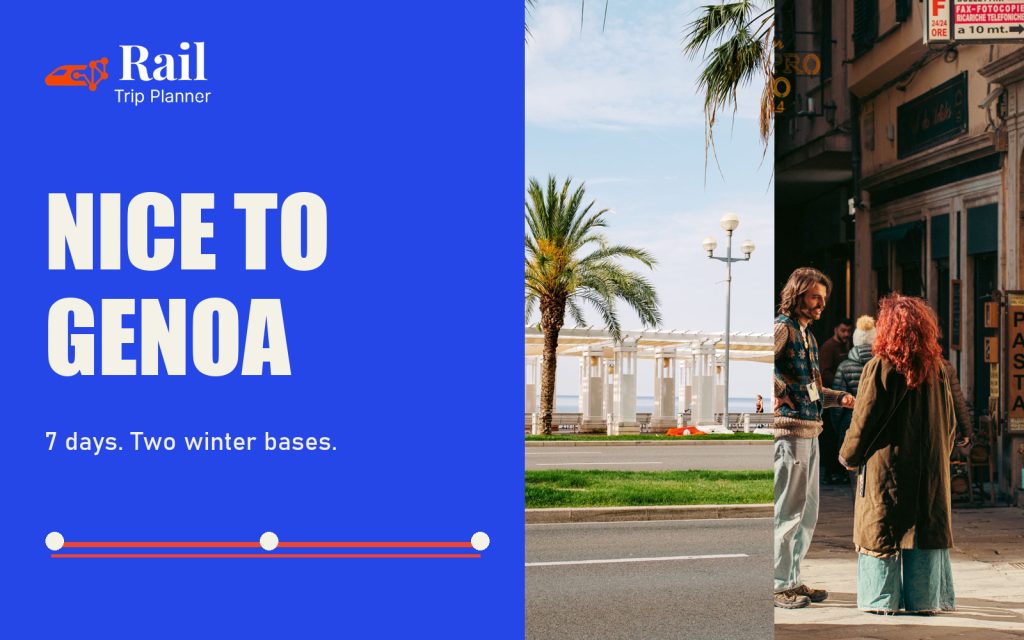
A winter trip along the French and Italian Riviera can work without a single beach day. The trick is to choose bases that still have something to offer when the sea is grey: old streets, art, food and somewhere warm to spend an afternoon.
This seven-day idea pairs three nights in Nice with three nights in Genoa, travelling between them via Ventimiglia. It gives you two full days in each city, one proper transfer day and a departure day. It does not try to turn every attractive town along the coast into another hotel change.
January to March 2027 is the intended planning window. This is a route framework, not a confirmed winter timetable. Your journey into Nice and onward from Genoa sit outside the six nights below.
The route at a glance
| Day | Sleep in | Main idea |
|---|---|---|
| 1 | Nice | Arrive, check in and keep the first evening easy. |
| 2 | Nice | Old town and waterfront when conditions suit; an indoor alternative if they do not. |
| 3 | Nice | An art-focused day, arranged around actual opening days. |
| 4 | Genoa | Nice-Ville → Ventimiglia → your chosen Genoa station. |
| 5 | Genoa | Old-town streets, food and the port area at a comfortable pace. |
| 6 | Genoa | Choose a museum-led day; add a waterfront walk only if it suits the weather. |
| 7 | — | Check out and start your separately planned onward journey. |
The day numbers are flexible. Swap the indoor visits when weekly closing days demand it; keep the three-night bases and transfer day intact.
Why these two bases make sense in winter
Nice offers a coastal starting point with a substantial city behind it. You can spend an enjoyable day away from the promenade, rather than needing the weather to rescue the itinerary. Genoa changes the feel of the trip: a working port city, old streets and a range of museum options, with the railway continuing along the Ligurian coast.
The contrast is the point. There is no need to add Monaco, Menton, Sanremo and Cinque Terre simply because they fit on the same broad map. Every detour takes time from your two bases. For a first version of this trip, keep optional extras optional.
Winter also means being flexible about outdoor time. A walk by the water can be a good part of the day; it should not be the only reason that day works. This route makes no promise of warm sunshine, swimming weather or empty attractions.
Days 1–3: settle into Nice
Day 1: arrive without spending your best plan
Choose accommodation with an arrival you can actually manage with your bags. If you arrive at Nice-Ville, compare the route from the station with the places you expect to visit. A location labelled central is not a guarantee of an easy walk, a lift or a quiet room.
Check in, find dinner and leave the rest flexible. If arrival goes smoothly, a short wander gives you your bearings. If the train is delayed or the weather is poor, nothing essential has been lost.
Day 2: city first, waterfront if it fits
Give the old town time rather than treating it as the gap between viewpoints. Plan one main area and leave room for a food stop. Add a promenade walk when the conditions are comfortable, with the option to shorten it.
Have your indoor alternative chosen before you leave the accommodation. Nice’s official museum directory is a useful starting point, but check the individual venue: temporary closures and different opening days matter more than a generic list of things to do.
Day 3: build around one museum
The Musée National Marc Chagall is one possible anchor. Its official winter information currently lists Tuesday closure, along with holiday exceptions and a temporary midday closure. That is a reason to arrange your visit around the venue’s actual calendar, rather than write “museum afternoon” into every day and assume it will work.
Choose a second stop only after allowing for the first visit, lunch and the journey between them. An art day with room to enjoy it is more useful than a long list of museums you have no time to enter.
Official references: Nice museum directory, Chagall practical information.
Day 4: Nice to Genoa via Ventimiglia
Search the journey as two connected parts: Nice-Ville to Ventimiglia, then Ventimiglia to the Genoa station that works for your accommodation. French pages may call the border station Vintimille; Italian booking pages use Ventimiglia.
SNCF Connect currently shows direct TER services taking around an hour on the French section. That is background for understanding the route, not a promise that the same departure times, frequency or conditions apply to your 2027 date. Trenitalia identifies Ventimiglia and Genoa as an Intercity corridor, but the exact service and arrival station still need selecting for your journey.
Do not publish or book this as a guaranteed through train from Nice to Genoa. Check the connection, whether any additional changes appear and whether replacement buses affect the day. Do not assume a search result or two tickets automatically settle the protection available if a connection is missed.
Keep the border change comfortable
Allow time to find the next platform and deal with luggage, rather than choosing a connection solely because a planner permits it. Your useful margin depends on the service pattern and your needs; there is no universal number that guarantees the connection.
Read the station names on the Italian options carefully. Genova Piazza Principe and Genova Brignole are different arrival points. A train that is slightly quicker on paper may leave a less convenient final journey to your room.
Treat this as a transfer day. An easy meal and a first look around Genoa are enough on arrival. Keep timed museum tickets and important evening bookings for another day.
Check works on both sides of the border
The official TER works page and Trenitalia’s disruption information both matter. Current 2026 notices are not a complete forecast for January–March 2027. The expiry of an older works notice does not establish that your later journey will be clear.
Use the official journey planners for the exact date, then check again close to departure. If winter services have not yet appeared for your date, save the route idea and wait for suitable inventory rather than treating an older timetable as confirmation.
Sources: SNCF Nice–Ventimiglia, TER works, Trenitalia Intercity corridor, Trenitalia traffic information.
Days 5–6: enjoy Genoa without relying on beach weather
Day 5: leave room for the city
Keep your first full day focused on the old town and port area, with food stops built into the route. Before setting off, look at the actual walking journey from your accommodation. A short distance on a map is not always a simple walk when hills, steps or luggage enter the picture.
Choose an indoor visit you would enjoy if the weather turns, rather than adding one merely to fill a gap. Genoa’s official tourism museum directory includes maritime, art and city-history options, so your rainy-day plan can suit your interests.
Day 6: choose a cultural anchor
The Strada Nuova Museums offer a concrete example of why the order of the days matters. Their published winter calendar for 2026/27 says that only Palazzo Rosso is open on Mondays. If you want the wider museum group, do not assume Monday provides the same visit as another weekday.
The Galata Maritime Museum is another possibility listed by the official tourism office. Check its own admission calendar before choosing it, and verify prices for your date and ticket type.
If the weather is pleasant, use the remaining time for an outdoor stretch. If it is not, the day already has a purpose. There is no compulsory Cinque Terre trip in this seven-day version: it would add another transport decision to a short stay.
Sources: Genoa museums, Strada Nuova winter opening information.
Accommodation: compare the last part of the journey
For both bases, compare the full cost and effort, rather than just the nightly headline price. Check the station-to-room journey, stairs or lifts, check-in time, baggage storage and cancellation conditions. Then look at where your actual visits are concentrated.
In Nice, that means comparing access from Nice-Ville with your city and waterfront plans. In Genoa, start with the train’s actual arrival station, then check the route to the accommodation. Neither staying next to a station nor staying in an old-town street is automatically the right answer for everyone.
This guide does not quote fixed hotel prices. Do not read “winter” as a guarantee of low rates; compare your exact dates and complete booking conditions.
Do you need a pass for this route?
Start by comparing the transport you will actually use. This framework has one main move between the two bases, so a pass should not be assumed to be the cheapest choice simply because the trip crosses a border. Your access journey, onward journey and other planned train days can change that comparison.
If you already have a pass, check the selected trains and any reservation requirements for that product. If you use individual tickets, compare the complete journey and the conditions of the tickets you intend to buy. Do not treat city transport or attraction entry as included without checking separately.
A booking checklist that keeps the route useful
- Choose your travel window and check the museum weekdays before fixing the order of visits.
- Search Nice-Ville → Ventimiglia → the appropriate Genoa station on the actual transfer date.
- Check works and substitutions with both operators, not just the first leg.
- Compare the hotel’s last-mile journey and check-in conditions.
- Put your main outdoor stops in the brighter part of the day, with an indoor alternative already chosen.
- Price your arrival and return separately from the six-night route.
The result is a winter coast trip with enough room to enjoy two different cities. The sea is still part of the experience, but the whole week does not depend on it.
Want a version built around your dates?
Rail Trip Planner organises European train journeys into a personalised itinerary PDF and a matching trip map. If this route is your starting point, your dates, budget, pace and arrival or departure needs can shape the plan. You make and pay for travel bookings separately.
Explore the service and public example.
Photography: Laura Paredis and Olivia / Pexels. Destination illustrations, not a record of a winter journey. Pexels.
 Winter Scenic Trains: Plan the Best Views Before Dark
 Train Tickets Not on Sale Yet? How to Plan Your Rail Trip
 Interrail Pass vs Individual Tickets: How to Compare a Trip with Few Train Days